





















Stadium security: Transforming a historical venue for the future
The video surveillance and access control at Luis Pirata Fuente Stadium in Mexico have been modernized with network solutions from Axis Communications. The stadium security system upgrade complies with international sports standards and ensures visitors a first-class experience.

The evolution of stadiums towards safe spaces
Stadiums often face challenges with fan safety due to hostile clashes between rival fans at sporting events, particularly football games. These incidents have prompted international organizations and football authorities to develop and enforce rules and protocols that ensure the safety of fans, spectators, and employees. Today, these measures are mandatory for sports clubs and federations worldwide.
The Luis Pirata Fuente Stadium, established in 1967 in Boca del Río, Veracruz, is one of Mexico’s most historic sports venues. Home to the Tiburones Rojos until 2019 and Atlético Veracruz in 2020, the stadium is currently undergoing renovations to meet modern international standards, aiming to become a first-class facility for sports and entertainment.
Recognizing that stadium security was just as important as the game itself, management embraced the opportunity for transformation.
Manuel Alcocer, general director of the Luis Pirata Fuente Stadium, states, "Nowadays, international organizations regulate what happens both on and off the field. Football is a big business and must offer everyone security, peace of mind, and the best experience. With the renovation of the stadium, one of the main focuses was the installation of security technology."
Different international regulatory bodies impose requirements that, if not met by the stadium, make it ineligible to host international events. That is why I insist that a robust security system is just as important to the game as the quality of grass where it is played. Thanks to Axis, this has been possible.
Stadium solutions to balance security and privacy
The 22,000-seat stadium had outgrown its existing systems and was in need of a major technological upgrade. MCS Networks, an Axis partner, implemented a three-phase modernization project.
- License plate recognition: They decided to install network cameras with license plate recognition (LPR).
- Real-time monitoring: They connected all devices to the stadium’s control room to provide real-time monitoring.
- Facial recognition: They integrated facial recognition technology, provided by a third party, into the system.
In the first two phases, the entire network, voice, and data infrastructure were established, along with strategic points for cameras and access control readers to enhance the stadium's security solution.
Network cameras
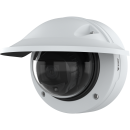
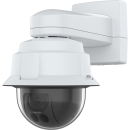
Axis cameras of various models such as dome cameras, PTZ cameras, bullet cameras, multisensor cameras, and panoramic cameras were installed throughout the stands, entrances, perimeter, VIP areas, ticket booths, locker rooms and technical rooms.
Network speakers
Additionally, Axis network speakers were deployed in external areas for emergency messages and strategic communication.
Access control
For access control, network door controllers and RFID card readers were installed to permit entry for authorized personnel.
The devices were added to turnstiles, box doors, technical areas, and vehicle entrances. Lastly, workstations were created in the monitoring center and servers added for access management
Video management software
Also, part of phase two was a video management software (VMS) upgrade to technology by ISS, an Axis technology integration partner. The ISS SecurOS system enables the stadium to harness advanced analytics directly on the cameras, providing real-time insights and improved security management.

Rodolfo Botello, director of business development at MCS Networks, says:
"This collaboration has made it possible to create a robust system adapted to the specific needs of the stadium. Thanks to this type of technology, it is possible to prohibit access to fans with negative or violent backgrounds, without affecting the play on the field. Facial recognition provided by a third party allows stadium staff to know exactly who is entering the premises and even to be able to identify patterns of behavior."
With the completion of phase-two, the video surveillance system was fully integrated with Axis access control, IP audio, and ISS video management software. Video from the cameras are displayed on monitors in the command center, allowing the security team to have a panoramic and detailed view of the premises at the same time, optimizing decision-making.
Panoramic cameras
The third phase of the project involved the installation of panoramic cameras at top of the stadium.
"The hands-on experience of the home team, coupled with technical support from Axis, has contributed to a significant advancement in stadium safety and management," commented Rodolfo Botello. For Manuel Alcocer, technologies like facial recognition are crucial, but must be implemented responsibly in line with data protection principles, privacy, and local regulations.
"Fans are informed of, and agree to, a set of regulations at the time of ticket purchase before entering the stadium, including the presence of video surveillance to ensure the safety and well-being of all attendees. Compliance with these regulations is mandatory; without the required protections in place, a stadium cannot host international matches or even National Team games.”

A new future for an old stadium
Manuel Alcocer is proud of the comprehensive video surveillance solution that is now in place at the stadium which plays an important role in security during matches and in daily operations.
"Before, it was common for petty thefts to occur in storage areas, such as bottles of water or soft drinks and other items. However, the mere presence of cameras is a deterrent to any criminal activity. Today, these areas are much more protected. Employees feel safe leaving their belongings. In addition, the system allows efficient monitoring in the event of any incident, as it is possible to detect people clearly," he details.
The collaboration between Axis and MCS Networks was key to the successful modernization of the stadium.
"MCS Networks has a long-standing relationship with Axis, as a Gold Partner, which has always guaranteed us close and direct support. We have confidence in the reputation and reliability of the equipment itself, and we are not only talking about video surveillance, but also access control, audio systems, and more," says Botello.
Since the stadium’s reopening, it has recorded successful cases of facial detection in at-risk situations, accurate monitoring of suppliers and employees, as well as a significant reduction in incident response time. The perception of safety among fans, authorities, and operational teams has also increased, reinforcing confidence in the venue as a destination for major events.
The new technological infrastructure brings Luis Pirata Fuente into compliance with the requirements of international sports bodies, which demand strict safety and operating standards. Without this level of protection, a stadium may be rendered unfit to host high-level sports matches or competitions. Today, the stadium not only meets these stadium security requirements, but is also among the benchmark examples in the country.
Products & solutions



Our partner organizations
You may also be interested in...


Get in touch
Want to know how you can benefit from Axis solutions? Get in touch and we will help you.
Contact us