















Hospital curbs patient falls with mobile virtual monitoring
Naples Comprehensive Health uses Axis cameras and microphones on mobile carts to virtually monitor patients at risk of falling. Safety technicians observe and interact with patients remotely, freeing nurses to attend to other patients.

Naples Comprehensive Health serves growing elder community
Naples Comprehensive Health (NCH) is a 715-bed community health system operating two hospital campuses in Naples, Florida. In addition to providing primary care services for the community, it maintains two freestanding emergency departments and multiple urgent care facilities in southwest Florida. “We serve an area with a growing elderly population,” says Chris Raphael, vice president of critical care, patient flow and ancillary services for Naples Comprehensive Health. “So we’ve been expanding our services and facilities to meet the unique needs of those patients.”
In our first year deploying the carts, we increased access to care by 80% and reduced falls by 5%. That was a significant improvement for us.

Seeking ways to reduce fall risks and improve care
One of NCH’s major concerns was how to prevent elderly patients falling from bed. According to Worldmetrics, an independent research firm, older adult patients account for 70% of the patients who fall out of hospital bed annually – risking injury, lengthier hospital stays, and increased mortality. “We were looking for tools that would help us protect patients at risk for falls,” shares Raphael. “Our goal was to complement nursing care with additional remote monitoring.”

Assisting nurses with virtual patient monitoring
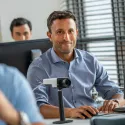
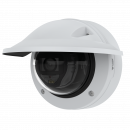
The search led to RRT Tech, a healthcare systems integrator and Axis partner, who recommended its mobile Celestia Virtual Care carts equipped with Axis PTZ cameras and microphones. The carts are designed to easily move from patient room to patient room, depending on where continuous observation is needed. The video streams to a remote viewing room where a team of virtual patient safety technicians (VPSTs) closely monitors their assigned set of patients, talking with them as needed. This alleviates the need for a constant one-on-one safety presence in the patient’s room, allowing hospital staff to prioritize bedside care and maintain efficient workflow based on real-time information.

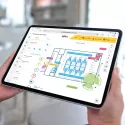
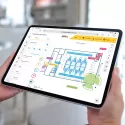
The Axis cameras tie into the hospital’s Epic electronic health record system via AXIS Camera Station Pro, giving the VPSTs the ability to simultaneously see the patient’s chart information – such as their name and room number, and assigned nurse with cellphone number – overlaid on their video screens. “The Celestia-Axis technology makes it easy for techs to calm a restless patient or call the healthcare team when something more serious occurs that needs a nurse’s attention,” explains Jason Thomas, a member of the risk response team for RRT Tech.
Increasing access to care, decreasing patient falls
NCH decided to purchase 49 Celestia-Axis carts, dividing them between their two hospital campuses. Their target use was high-fall-risk patients. “In our first year deploying the carts, we increased access to care by 80% and reduced falls by 5%,” boasts Raphael. “That was a significant improvement for us.” Raphael notes that a hardwired solution would have taken the hospital significantly more time and infrastructure to implement. “Having a mobile virtual patient monitoring solution allows us to serve more patients over time because the resource isn’t limited to a handful of rooms,” states Raphael.
Customizing interactions with patients
The Celestia-Axis solution contains several features to help techs make remote observation as pleasant as possible for NCH patients.
- Patient privacy – The cameras are set up for live viewing only. Safety techs control the cameras remotely, turning them off or redirecting them when family or the healthcare team is in the room.
- Video clarity – The exceptional zoom capability of the cameras means the cart can be positioned less obtrusively while still enabling the tech to zoom in for a close-up view of the patient when needed.
- Audio clarity – The high-fidelity microphones can pick up even the most soft-spoken patients or amplify a tech’s voice for the hard-of-hearing.
- Lowlight vision – With the camera’s low-lux lens, techs can continue to observe their patients even when the room lights are dimmed at night.
- Alarm – RRT programmed a unique sound file for an alarm, which the remote techs can trigger for a life critical event.
- Multilingual communication – Because of its multicultural patient population, Raphael’s team also programmed eight common phrases in multiple languages to help techs provide a higher level of safety, aid, and assurance to patients as they await in-person assistance from care staff.
- AI-driven analytics – If NCH chooses to employ them, intelligent, in-camera audio and motion analytics can trigger alerts when they detect loud room noises like shouting, coughing, screaming, or glass breaking, and risky movements like a patient attempting to get out of bed. These timely warnings enable safety technicians to intercede more quickly to relieve patient distress, interrupt unsafe behavior, or summon nursing staff to the bedside for urgent care.

Providing peace of mind for patients and nurses
“Our goal in adopting this new technology has been to augment the care we’re already providing,” asserts Raphael. “As a Pathway to Excellence hospital, we have a healthy environment for care delivery. This is another layer of support for that.”
Having trained personnel monitoring the cameras ensures that the hospital maintains that all-important human touch. “Our VSPTs often converse with the patients under their observation, checking in to see if they are okay, or even chatting with them at night when they might be having difficulty sleeping.”
Operating on a shared model of care gives nursing staff, patients, and their families peace of mind knowing that someone is always watching to prevent fall risks, even when no caregiver is in the room.

Delivering 24/7 virtual care where it’s most needed
In the first year the system was adopted, NCH techs clocked over 170,000 hours of virtual observation. Year two is trending for over 200,000 hours. “We’re currently experiencing about 75 to 80% continuous camera usage,” declares Raphael.
Today, NCH’s virtual patient safety team watches over 30+ at-risk-of-fall patients per shift. “Investing in the Celestia-Axis solution has allowed NCH to provide our patients with an unprecedented level of personal safety attention,” says Brian Marron, manager of the Virtual Patient Safety Tech Program for Naples Comprehensive Health. “It’s been a real force multiplier.”
Products & solutions




Our partner organizations
Get in touch
Want to know how you can benefit from Axis solutions? Get in touch and we will help you.
Contact us