














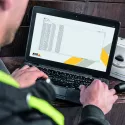






Automated access transforms Dorset’s recycling centres
Dorset Council deploys Axis licence plate recognition technology to improve operational oversight and efficiency across its household recycling centre network. At four pilot locations the solution integrates directly with the council’s booking platform to automate vehicle check-in and booking verification.
Dorset Council, in the south of England, operates ten household recycling centres, receiving approximately 1.1 million individual visits and handling 55,000 tonnes of waste annually. The service, managed through a third-party contractor, costs the council more than £5 million each year.
Historically, residents could simply arrive at a site with their waste, a freedom which created unpredictable peaks in demand resulting in lengthy delays, particularly at Dorset’s smaller centres.
“One of the biggest challenges we faced was the unpredictability of demand,” explains Matthew Boulter, Commercial Services Manager of Dorset Council. “Residents often had no way of knowing how busy a site would be before they arrived. During periods of good weather, particularly when people were carrying out gardening or home improvement projects, visitor numbers could increase significantly, leading to queues and varying experiences across our sites.”

Dorset Council also identified an imbalance in the way cross-border use of Household Recycling Centres was managed. While Dorset Council contributes towards arrangements that allow its residents to use selected neighbouring authority sites, there was no equivalent mechanism in place to recover costs from non-Dorset residents using Dorset facilities.
“Our residents benefit from being able to use certain recycling centres operated by neighbouring authorities, and Dorset Council contributes towards those costs,” says Matthew Boulter. “At the same time, non-Dorset residents could use our facilities free of charge, with the associated disposal and operating costs being met by Dorset Council. One of the key drivers for the project was to provide a mechanism to better manage and understand that cross-border use.”
Axis license plate recognition (LPR/ANPR) technology is, in our opinion, market-leading in its detection rates. The products integrate well, and edge processing meant we could do it with minimal back-end infrastructure.
Dorset Council estimated that restricting free access for non-residents could save approximately £120,000 each year. It initially planned to use an online booking system which could verify residency and apply charges, while also distributing visits more evenly throughout the day to improve the experience.
However, the initial operating model still required human intervention to manually check every booking. Providing seven-day coverage was estimated to cost around £60,000 per site per year, creating a potential £240,000 annual staffing bill for the four recycling centres receiving the booking system, negating any gain.
“We were looking at £240,000 of additional cost to deliver £120,000 worth of savings,” says Matthew. “It didn’t make sense. The common thread throughout the project was the vehicle registration number. Residents provide it when they make a booking, so we felt there had to be a way of using ANPR technology to automate that verification process and avoid the need for manual checks at every site.”
Dorset Council opted to use an established public-sector software platform to handle bookings and customer information. Its third-party contractor introduced its existing technology partner, Unique Group, which proposed a hardware solution based on AXIS License Plate Verifier technology.
The common thread throughout the project was the vehicle registration number. Residents provide it when they make a booking, so we felt there had to be a way of using ANPR technology to automate that verification process and avoid the need for manual checks at every site.

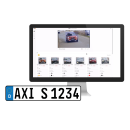
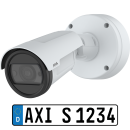
Axis was already Unique Group’s preferred technology partner for specialist network video projects, and the company determined that the AXIS P series License Plate Verifier Kit offered the accuracy needed to read registrations across sites with different layouts. Its edge capabilities also allowed the system to operate without a dedicated local server at each centre.
“This was solution-led,” says Craig Moore, Commercial Director at Unique Group. “When we heard the problem, our immediate response was that we could devise a solution using Axis products and integrate it with Dorset’s chosen booking platform. Axis license plate recognition (LPR/ANPR) technology is, in our opinion, market-leading in its detection rates. The products integrate well, and edge processing meant we could do it with minimal back-end infrastructure.”
A pilot at the Dorchester site tested camera positioning, connectivity and integration before deployment continued. Posts, signage and vehicle stopping positions were adapted to give the cameras a clear view, while cabling had to withstand the demands of a recycling centre environment. Following a positive test, infrastructure was subsequently installed at all ten sites. Four key locations became fully bookable, while the Axis technology also automated vehicle-permit management across the remaining centres.
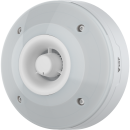
When a vehicle arrives, the license plate camera reads its registration plate and sends the information through Dorset Council’s network to its booking platform. The platform checks the registration against live booking and permit data before sending a response back to the Axis system. A network strobe siren then gives the appropriate signal. A visitor with a valid booking sees a green light. Site employees may receive a different signal if that visitor has declared DIY waste or is using a van permit and therefore requires assistance.
“We designed different responses based on what site staff and the visitor each need to know,” says Matthew. “The visitor may get a green light while staff get a blue light because an intervention is needed.” The same Axis device can deliver a more urgent alert if a banned vehicle arrives, says Matthew: “The visitor is told to report to a member of staff before unloading. Site staff get a red light with a vocal alert. Whatever they are doing, they know they need to get to the entrance.”
The biggest technical challenge in early testing was latency. Initially the system could take up to 20 seconds to return a result, far longer than Matthew considered acceptable. “When a customer is waiting at the entrance for a response, 20 seconds feels like a very long time,” he says. “There were points when I questioned whether we could achieve the level of performance we were aiming for.”
Dorset Council’s ICT team worked with Unique Group to refine the process, and the average time between detection and the light changing was ultimately reduced to around five seconds. Because the Axis camera reads the registration while the vehicle is still approaching, the response appears almost immediate to the driver.
“The system has been well received by residents,” says Matthew. “More than anything, it's about predictability. Residents can plan their visit with confidence, arrive at the site and access the service quickly and efficiently, without having to worry about unexpected queues or delays.”

Measurable early results
During its first nine weeks, the four-site booking system processed 46,258 bookings. Compliance increased from 55% in week one to 87% in week nine, with some 96.7% of bookings made online. The live connection between the booking platform and Axis edge devices also allows residents to book immediately before travelling.
“One of our key design principles was flexibility,” says Matthew. “We wanted residents to be able to make a booking when it suited them, including on the day of their visit, rather than requiring significant advance planning. We're now seeing around 75% of bookings being made on the same day, often just a few hours before arrival, which demonstrates that the system is supporting the spontaneous visits residents told us were important to them.”
We're seeing data and trends that we've never had access to before. It's helping us better understand visitor behaviour, how our sites are being used and where there are opportunities to improve the service. The more we analyse the information, the more opportunities we find to make informed decisions and drive further efficiencies.
As for reducing the impact from residents of neighbouring councils, in April 2026, waste tonnage at the four bookable sites was 30% lower than in April 2025; during the first nine weeks of the system’s deployment, 544 paid non-resident visits generated £4,624 in income that would not previously have been captured. Axis-derived ANPR data is also helping to identify potential trade waste misuse. Some permitted vehicles were found to be visiting as many as eight different Dorset sites, behaviour that prompted permit reviews and further investigation.

The council is cautious about drawing long-term conclusions from its initial data, but early indications suggest that the project is delivering many of the anticipated benefits. The information generated by the Axis platform and integrated booking system can now be analysed alongside tonnage data, housing growth projections and operating costs to support future service planning and decision-making.
“The real value for me is the insight we're now getting from the system,” concludes Matthew. “We're seeing data and trends that we've never had access to before. It's helping us better understand visitor behaviour, how our sites are being used and where there are opportunities to improve the service. The more we analyse the information, the more opportunities we find to make informed decisions and drive further efficiencies.”
Products & solutions

Solutions by application area

Solutions by industry
You may also be interested in...


Get in touch
Want to know how you can benefit from Axis solutions? Get in touch and we will help you.
Contact us