




















Aalst Police leverage smart cameras to transform city safety
Politie Aalst invested in innovative technology to modernize its city surveillance system. They deployed a comprehensive Axis camera solution across 54 locations, creating a state-of-the art public safety concept.
The advanced police camera network feeds into a 24/7 control room for real-time monitoring. This enables rapid incident detection, swift deployment of intervention teams, and significantly enhances the police's ability to manage occurrences. The in-house developed concept provides a powerful tool for maintaining order as well as increasing citizen security.
Public safety and order as first priority
The Belgian police system operates on two levels: federal and local. Politie Aalst, one of 176 local zones, diligently serves the city of Aalst and its surrounding sub-municipalities, including Baardegem, Erembodegem, Gijzegem, Herdersem, Hofstade, Meldert, Moorsel, and Nieuwerkerken.
Under the management of Chief Commissioner Jürgen Dhaene, who oversees local policing policies, and the authority of Mayor Christoph D’Haese, Politie Aalst is committed to ensuring public safety and order by investing into smart city surveillance technology.
Politie Aalst consists of 350 employees, 217 of whom are operational staff. One of the services provided by the police zone is the technical support team.
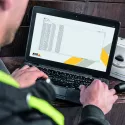
Among other things, they are responsible for processing camera images and camera management. With a team of 5 people, they develop the camera policy for the police zone, plan the deployment of camera resources, and support colleagues in viewing and processing camera images.
Aalst is a medium-sized city with a population of over 90,000. This presents certain challenges in terms of security. A high-performance camera network helps to maintain this security. It supports colleagues in the field, strengthens cases with evidence, and automates certain processes.
In 2024, there were 6,887 registered crimes, 60,005 traffic violations, and 64,026 municipal administrative sanctions, also known as GAS fines. 1,361 of those recorded crimes involved theft and extortion.
Investing in a modern city surveillance system is an investment in the safety of our residents, business owners, and visitors. It not only helps us to detect and reconstruct incidents more quickly, but also to work preventively and create a safer public space. This added value means that this investment will definitely pay for itself in the long term, both in terms of increased safety and a greater sense of security in our city

Modernizing city surveillance systems
Before 2025, Politie Aalst relied on camera surveillance across 25 sites, but this setup was fragmented and became increasingly inadequate because of two reasons: Outdated technology and changes in the city landscape.
First, the technology in place was no longer state-of-the art. The system existed of multiple camera brands. The camera network did not have 360° views but only fixed cameras with a predefined view.
Additionally, the night lenses were not of sufficient quality and overexposure made it difficult to get usable images.
Secondly, the plan for camera locations was extremely outdated. Due to changes in the streetscape, such as the reconstruction of squares, new terraces for restaurants and cafés or changes in traffic circulation, the cameras were no longer ideally positioned.
Some were too high or ended up due to the changes behind a statue or building.
The new plan included all transformations in the city center as well as added new locations requiring camera surveillance.
Today, the entire city center is pictured on the surveillance map. Additionally, the new plan also makes sure that squares in the city center can now be fully monitored, including all access points, and not as before just one part of it.

Enhanced city surveillance with advanced cameras
Recognizing the urgent need for the modernization of its city surveillance concept, Politie Aalst launched a public tender in September 2024.
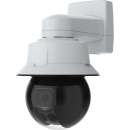
TEIN Technology, a trusted long-term partner of the police and Axis, was commissioned to implement a state-of-the-art surveillance solution featuring advanced cameras and systems. Today, 54 locations are equipped with comprehensive 360° cameras, including 28 PTZ cameras, totaling an impressive amount of 244 lenses.
This investment in state-of-the-art city surveillance significantly enhances their operational capabilities, shifting from manual, reactive monitoring to a proactive, well-planned surveillance network that covers a large part of the city center.
Chief Commissioner Jürgen Dhaene: "With the expansion of our camera network, we now have modern, high-performance cameras that cover the entire city center. This means that our services can respond more quickly and effectively when incidents occur. Cameras also have a deterrent effect: anyone who knows they are being monitored will think twice before committing vandalism, theft, or violence.”
Strategic camera deployment and data-driven insights
The new security concept underscores Politie Aalst's commitment to a data-driven strategy. Under the direction of Wim Van Wijmeersch, Head of the Technical Support Team, the camera deployment was meticulously planned.
Each device was strategically selected for a specific function and its precise location, creating a dense, overlapping network throughout the city center that forms a robust security net.
His team strategically positions cameras using the pixel density model, detect, observe, recognize, and identify (summarized DORI), at each critical access point to provide an extensive urban surveillance net without any gaps.
- Detect: Understand what is happening, supported by 244 lenses directly broadcasting into the control room, in case of an incident.
- Observe: Follow activity across the scene.
- Recognize: Deliver reliable information to enable the intervention team out into the field to identify incidents quickly and if applicable recognize suspects.
- Identify: Utilize PTZ cameras to zoom in and confirm intricate details such as suspects or license plates.
This methodology ensures extensive coverage, particularly in main squares and hotspots, where cameras are strategically placed at every corner or potential access/exit point. To ensure peak performance, the system undergoes continuous review and optimization by Wim’s team.

Boosting citizen security with agile technology
The city surveillance system in place is not static but is continuously evaluated and changed in response to ongoing urban developments: When a location is flagged as problematic, one or two temporary cameras are first deployed.
If their effectiveness is proven, they are then replaced by a permanent installation. If the problem is temporary, no fixed pole with a camera will be installed.
This agile approach targets typical hotspots like marketplaces, public squares, and the railway station, primarily addressing public nuisance and behavior rather than just vandalism.
For example, as touristic activities increased at the main square some time ago, the conditions for camera installments changed too. Now, cameras need to be positioned differently to be able to cover the activities despite restaurant layouts and parasols.
Wim emphasizes the transformative impact of the PTZ cameras for urban security: "They provide a 'helicopter view,' giving us enough data and a comprehensive understanding of situations which supports our work in the control room. Real-time information enormously helps the intervention team out in the city. Every extra information we can provide is of immense value to them.”
While fixed cameras still play a crucial role in Aalst city surveillance plan, the PTZs offer unparalleled flexibility.
Installations now prioritize public buildings or dedicated pillars, with a special agreement in place for mounting on the railway station's roof, avoiding private property where possible.
Wim and his team are on top of urban developments to identify future hotspots and need for security installations. These new hotspots may arise from feedback from other departments, colleagues or city services, or because of urban development.

Dual-purpose: Enhancing urban safety and fighting waste dumping
To be able to fully use the investment in the camera network, the camera infrastructure serves another critical function next to providing robust safety and security monitoring. The network cameras additionally are used for observation of loitering and waste dumping.
Safety and security: proactive incident response
Politie Aalst's in house control room, one of only two in East Flanders, operates 24/7 in conjunction with the intervention service. Staffed by two employees (three during large events like the carnaval), it manages both European emergency calls (112, forwarded from the provincial control room) and direct local calls.
This central hub coordinates field teams, handles radio communication, and supports police operations with vital information from police systems and databases.
When an incident occurs, the process is streamlined:
- The crisis room monitors live feeds from the extensive camera network throughout the city.
- Upon an alert, the team immediately sees the live video footage via the Genetec video management platform.
- The situation is assessed, and suspects can be tracked across the camera network. Intervention teams are dispatched and guided in real-time via radio, informed of the suspect's movements.
- After an incident, the team identifies individuals, checks for discarded evidence, and provides precise descriptions and locations of evidence to investigators. This collected data is then shared with the federal system when necessary. Comprehensive visual evidence ensures that suspects can be confronted directly with undeniable proof, making the police's work significantly easier and more effective.
The control room also significantly contributes to officer safety and response times, providing real-time intelligence and directing intervention teams across the entire territory. Large monitoring screens are integral to this rapid response and better coordination, underscoring the invaluable role of the new city surveillance system.
Addressing challenges: loitering and waste dumping
The new camera system tackles specific community nuisances. Loitering and illegal waste dumping near residential areas, which often end up in common complaints from citizens, are now effectively addressed.
With the ability to track individuals or vehicles via license plates, offenders can be identified and fined, backed by irrefutable visual proof.
Upholding public trust: Data protection and GDPR compliance
A cornerstone of Politie Aalst’s camera deployment is an unwavering commitment to data protection and public trust. The entire system is fully GDPR compliant, with every single camera installation approved by the Data Protection Officer (DPO).
Mandatory signage is in place, and all cameras are meticulously registered. This approach is taken over for every new city surveillance installation, no matter if it is a flexible or fixed one.
While legal retention for footage is 365 days, Politie Aalst typically retains data for 30 days, unless an extension is required for an ongoing investigation.
Access to footage is strictly restricted and only permitted on-site within the police office. This ensures that, for instance, investigator A cannot access footage related to investigator B’s cases.
The files never leave the building and can only be viewed in a secure environment. Additionally, there is a protocol in place which documents name, date and the selected information.
Real-world impact of city surveillance and beyond
The close cooperation with the railway police and other police zones exemplifies the system's impact.
After a stabbing in a neighboring police district, Politie Aalst received information that the perpetrators were on the train to Aalst. The cameras on the station square allowed officers to identify the perpetrators and ensure they could be detained.
Looking ahead, Politie Aalst continues to expand its intelligent city surveillance network. In 2026, two additional bridges will be equipped with advanced 360° cameras, further enhancing safety management capabilities across the zone. The investment in Axis solutions has empowered Politie Aalst to create a safer, more orderly environment for its citizens, backed by robust technology and a commitment to privacy.
Products & solutions
Our partner organizations
You may also be interested in...


Get in touch
Want to know how you can benefit from Axis solutions? Get in touch and we will help you.
Contact us