




















Choose location
Choose location
Global
-
-
North and Central America
Can't find your location? Visit our global site in English.
-
South America
Can't find your location? Visit our global site in English.
- Asia
-
Oceania
Can't find your location? Visit our global site in English.
-
Europe
- Austria - Deutsch
- Belgium - English Français
- Czech Republic - Česky
- Finland - Suomalainen
- France - Français
- Germany - Deutsch
- Italy - Italiano
- Kazakhstan - Русский
- Netherlands - Nederlands
- Poland - Polski
- Portugal - Português
- Romania - Română
- Spain - Español
- Switzerland - Deutsch Français Italiano
- Sweden - Svenska
- Turkey - Türkçe
- United Kingdom - English
- Africa and Middle East


Axis Perspectives 2026: The intelligent edge
A glimpse into what’s next for intelligent video, the Axis Perspectives 2026 report delivers research-driven insight, expert analysis, and strategic foresight on how smart, connected technologies are reshaping security and beyond.
The evolution of intelligent video surveillance
IP cameras have undergone a significant transformation from simple monitoring devices to sophisticated tools that deliver real-time insights and operational value. This evolution is driven by technological advancements, expanded use cases, and growing integration across industries. This progression invites a closer look at the innovations, strategic benefits, and shifting market trends, shaping the future of intelligent video systems.

Technology milestones that enabled smarter cameras
The journey from basic video surveillance to intelligent sensing has been marked by a steady progression of breakthroughs – each expanding what cameras can see, understand, and do. What began as a shift from analog to digital has evolved into a fusion of edge computing, AI-driven analytics, and cloud-native architecture.
A foundational enabler was the development of purpose-built chipsets, bringing advanced image processing and analytics directly to the camera and reducing latency, bandwidth use, and reliance on central servers. This made possible the first built-in video analytics, from basic motion detection to advanced object detection and metadata-generated tools, paving the way for today’s deep learning models. Meanwhile, image quality advanced with megapixel resolution, multisensor designs, and innovations like Lightfinder and Forensic WDR, delivering clarity in low-light and high-contrast conditions. To manage rising data volumes, compression technologies – from H.264 and H.265 to AV1-enabled efficient storage and streaming, especially in cloud-based systems.
The rise of cloud and hybrid architectures gave organizations flexibility to scale while maintaining edge performance. Features like auto-configuration, remote updates, and health monitoring made deployment and management faster, more consistent, and less resource-intensive. Industry-wide adoption of open standards such as ONVIF-enhanced interoperability, while growing connectivity brought cybersecurity to the forefront –with secure boot, signed firmware, and encryption now essential safeguards. Together, these milestones have transformed IP cameras into intelligent systems that deliver real-time insight, operational efficiency, and strategic business value.

How intelligent cameras are transforming operations
As IP cameras have evolved, so has their role. No longer limited to surveillance, these systems now deliver immediate intelligence, support faster decision-making, and create value across industries. Their impact is expanding in business intelligence and operational efficiency as well, reshaping how organizations operate, plan, and respond.
From passive surveillance to real-time intelligence
Traditionally, cameras served as passive devices – footage was often reviewed after incidents occurred. Today, IP cameras proactively detect unusual activity, recognize patterns, and trigger real-time alerts. This allows organizations to respond quickly and prevent incidents from escalating.
Smarter sensing at the edge
Onboard processing means critical information is generated the moment it’s needed, enabling capabilities like license plate recognition, object detection, and scene analysis without relying on centralized infrastructure. This improves response times and situational awareness in fast-paced environments like transportation, logistics, and retail.
Improved image quality, efficiency, and reach
New generations of IP cameras deliver high-quality imagery even in low light or harsh conditions, ensuring accurate scene capture across diverse environments. At the same time, energy-efficient designs enable wide-scale deployment – including in remote or infrastructure-light areas – while AI-enhanced image processing reduces false positives and improves long-term reliability
Scalable systems, simplified management
Features like auto-configuration, remote updates, and hybrid cloud support streamline deployment, maintenance, and scaling. Open standards further enable integration across locations and systems, offering flexibility and consistency for distributed operations.
Cross-sector value and measurable ROI
Across industries, intelligent video is driving measurable outcomes:
- In retail, it reduces shrinkage and informs layout and staffing strategies
- In transportation and logistics, it increases throughput and reduces errors
- In industrial settings, it supports safety, compliance, quality control, and predictive maintenance
- In smart cities, it improves traffic flow, emergency response, and public safety

Cameras drive AI-powered quality control at BMW
High-resolution network cameras are central to BMW Group’s AI-driven quality inspection (AIQX) across its iFACTORY facilities. Integrated with BMW’s AIQX platform, they capture detailed vehicle images in real time, enabling automated, accurate inspections of components. Leveraging advanced imaging, the system provides reliable data, allowing AIQX to detect defects instantly and support staff in correcting errors quickly. Used across BMW’s global operations, it drives efficiency, reduces costs, and maintains high cybersecurity and sustainability standards on the path to fully digitalized production.
Evolving roles and trends in intelligent IP cameras
While security and safety remain primary drivers, the role of video surveillance is rapidly expanding into business intelligence and operational efficiency, reflecting a broader shift toward intelligent, value-generating infrastructure.
In 2025, Axis annual surveys of end customers across the Americas, EMEA, and APAC show continued strong demand for security and safety use cases, alongside increasing adoption of video systems for business intelligence (38%) and operational efficiency (42%). By comparison, in 2024, 20% of respondents reported using video systems for business intelligence and 38% for operational efficiency, in addition to security and safety functions.
Architects and Engineers (A&Es) who specify and recommend these systems report similar adoption rates, signaling growing demand for solutions that contribute to broader innovation goals and deliver measurable business value.
When asked about anticipated future use cases for video surveillance, their responses suggest that customers will significantly expand their usage of IP cameras in all areas, including security, safety, business intelligence and operational efficiency.
Security remains the cornerstone – cited by 89% end customers and 96% of A&Es as the primary use case – reaffirming its critical role in protecting people, assets, and infrastructure. Yet organizations are now layering on new applications:
- Safety has become a central focus, with 81% of customers prioritizing it in their video strategy. This reflects a shift toward proactive risk management — using technology not just to respond to incidents, but to prevent them.
- Business intelligence is also on the rise with 38% using video to uncover insights on customer behavior, space utilization, and performance trends that inform smarter decisions.
- Operational efficiency is a growing priority with 42% of organizations leveraging video to optimize workflows, manage resources in real time, and streamline logistics.
Together, these trends reveal a powerful shift: video technology is evolving into a multi-dimensional platform. While security remains fundamental, organizations increasingly see camera networks as tools for insight, safety, and operational excellence – protecting what matters most while driving measurable business value.
Overall, this data underscores a broader transformation underway in the video surveillance market. According to Novaira Insights, the number of installed cameras outside China is projected to reach 562 million by the end of 2025, climbing to 736 million by 2029. Globally, the largest regional installed bases in 2025 include the U.S. (100 million), India (86 million), and Latin America (70 million), with Western Europe, the Middle East and Turkey, Southeast Asia, Northeast Asia, and Oceania contributing significant additional volumes.
In the U.S., an estimated 10 million cameras are added each year, while other regions see annual shipments ranging from 0.8 million in Oceania to 11 million in India. As analog HD cameras continue their steady decline – accounting for just 10% of total camera revenue in 2024 – IP cameras accounted for 90%, highlighting the prevalence of connected, digital infrastructure.
In parallel, intelligence is becoming the new standard: nearly 80% of cameras shipped in 2024 included analytics capabilities – with 23% offering rules-based analytics and two-thirds already featuring deep learning-based functionality.
As technology becomes more advanced and interconnected, it is enabling smarter, more responsive environments. IP cameras are now integral to digital transformation strategies, positioning video not just as a security asset, but as a driver of enterprise intelligence.
Key shifts driving the transformation
The intelligent edge is increasingly shaped by external forces that influence how it is applied, integrated, and valued within organizations. Broader shifts in enterprise strategy, technology maturity, and regulatory landscapes are redefining expectations – positioning edge systems not just as infrastructure, but as critical enablers of performance, security, and innovation.

Modernization driven by manual inefficiency
The prevalence of manual processes in security – with roughly 80% of expenditures devoted to guards, monitoring, installation, and maintenance – highlights a broader macro trend: industries that remain labor-intensive are ripe for transformation. Intelligent IP devices, equipped with AI and video analytics, can automate routine tasks, reduce false alarms, and minimize alert fatigue, allowing personnel to focus on higher-value strategic work.
The impact is clear: Securitas reports AI-powered monitoring has cut escalated false alarms by 59%, freeing hundreds of guard-hours annually, while a study by Omdia, commissioned by BriefCam, found that over 85% of organizations using video analytics achieve rapid ROI within one year.
Security operations exemplify how antiquated, manual workflows are driving the adoption of digitalization, edge intelligence, and automation – enabling organizations to modernize operations, optimize labor, and extract actionable insights from connected devices.

From cost centers to value drivers
Physical security technology is a strategic asset driving measurable business outcomes, with today’s organizations prioritizing investments that align with business goals. Axis research confirms this: 64% of end customers prioritize upgrading infrastructure for performance and compatibility as a primary driver to success over the next 1-3 years, while 37% emphasize investing in emerging technologies like AI and IoT to future-proof operations and unlock new value.
IT, OT and physical security convergence
Another key trend is the convergence of information technology (IT), operational technology (OT), and physical security. Traditionally siloed systems are increasingly unified as enterprises adopt integrated platforms that connect video, sensors, and enterprise applications. This convergence enhances data sharing, strengthens security, and increases operational efficiency.
Integrated platforms also enable edge-generated data to flow seamlessly into business workflows, supporting realtime monitoring, advanced analytics, and process automation across the enterprise. In our recent research, 41% of end customers identified integrating different security systems into one unified platform as a top priority for success over the next 1–3 years. This demand signals a strategic move toward resilience, simplified management, and enhanced situational awareness.
Rise of edge and hybrid AI
Deep learning at the edge is transforming how intelligence is deployed and scaled – with hybrid architectures enabling AI models and analytics to run both centrally in the cloud and locally at the edge, for low-latency, real-time decision making.
By processing data on the edge and sending only essential information to the cloud, organizations reduce bandwidth demands and improve privacy while maintaining scalable analytics. Reflecting this shift, IDC forecasts that global edge-computing spending to grow from US$208 billion in 2023 to over US$380 billion by 2028 (13.8% CAGR), underscoring the rapid enterprise adoption of distributed, hybrid infrastructures that support real-time intelligence at the edge.
User experience focus
As IP video systems become more advanced, enterprises are implementing simplified, intuitive interfaces that reduce operator workload and accelerate decision-making. Automation is crucial: Organizations want systems that minimize manual oversight, streamline complex workflows, and augment human capabilities through AI-driven assistance with clear, measurable impact on safety and efficiency.
Industry research reinforces this evolution. In Axis’ State of AI in video surveillance report, 62% of system integrators identified AI and generative AI as top trends, while end customers prioritized analytics and actionable insights. This points to a growing recognition that how intelligence is delivered – through dashboards, alerts, or embedded recommendations – is just as critical as the intelligence itself.
To meet these expectations, intelligent edge platforms are prioritizing usability, presenting insights that are visual, accessible, and tailored to non-technical users. These tools empower faster response times, reduce training burdens, and improve situational awareness. Clean design and efficient insight delivery are increasingly essential for adoption, scalability, and long-term value.

"By eliminating vendor lock-in and simplifying integration, open, interoperable ecosystems enable organizations to scale intelligent edge solutions efficiently while adapting to changing business demands."
Fredrik Nilsson, Vice-President, Americas, Axis Communications
Data governance: Privacy and security at scale
With the proliferation of connected devices and the growing volume of data generated and managed across distributed environments, governance is critical. Enterprises face mounting challenges around privacy, compliance, and data security
Axis research shows that 44% of end customers identify cybersecurity and data protection as a top priority for success over the next 1–3 years, underscoring the need to safeguard sensitive data without hindering innovation.
Cybercrime is now the world’s fastest-growing criminal threat, with annual worldwide losses currently at US$9.22 trillion8 from crimes ranging from data theft and ransomware to IP losses and operational shutdowns. This highlights both growing exposure and an expanding attack surface within physical security infrastructure.
This convergence of rising threat exposure, growing attack frequency, and high breach costs makes clear that enterprises integrating physical security with IT and OT must adopt unified governance strategies. Safeguards across video, sensors, and enterprise systems are no longer just best practices – they are essential to preserving trust, ensuring compliance, and preventing disruptions.
Open ecosystems: Innovation through interoperability
Open, vendor-neutral platforms are now crucial to intelligent edge architectures. By enabling seamless integration across systems, networks, and devices, open ecosystems reduce deployment complexity, lower costs, and foster innovation, eliminating vendor lock-in and increasing agility.
A recent milestone is the adoption of the AV1 video codec in surveillance [EN], which improves compression efficiency, reduces bandwidth and storage needs while enhancing video quality, AI performance, and cybersecurity – especially in cloud-connected environments.
Overall, open platforms allow organizations to unify video, sensors, analytics, and enterprise applications, scaling intelligent edge solutions as needs evolve. Together, these forces – enterprise demand for value, IT/OT/Physical Security convergence, edge and cloud AI, stringent governance, user-centric design, and open ecosystems – are redefining the intelligent edge.
Success now depends on upgrading infrastructure, strengthening cybersecurity, integrating systems, and embracing emerging technologies to unlock new competitive advantages in a rapidly digitizing world.

What is AV1
AV1 is a modern, open, royalty-free video codec created by the Alliance for Open Media (AOM), a consortium of major technology companies including Google, Amazon, Netflix, Microsoft, and others. Launched in 2018, it was designed to replace older, proprietary codecs with a more efficient, future-proof standard optimized for high-resolution video, cloud streaming, and broad device interoperability. As an open standard, AV1 encourages industry-wide adoption and innovation, positioning it as the next foundational codec for digital video—including IP surveillance.
Top 3 benefits of AV1
- Offers high-quality video at low bitrates, allowing for efficient network video transmission and reduced storage costs.
- Support for video wider than 8K, otherwise only possible with H.265.
- Hassle-free playback thanks to decoding support in web browsers, operating systems, and mobile devices.
The expanding role of the intelligent camera
With embedded analytics, AI capabilities, and seamless integration into broader systems, IP cameras now contribute directly to business operations, customer experience, and strategic decision-making. Their expanding role reflects a broader shift from passive monitoring to active, value-generating assets within the modern enterprise.

Maximizing enterprise value
IP cameras have evolved into platforms that deliver real-time analytics, AI-driven threat detection, and automated response. Their capabilities now span risk mitigation, compliance, and operational insight, driving measurable business value.
- Real-time threat detection: IP cameras can automatically detect behaviors like loitering, perimeter breaches, and large gatherings, triggering immediate alerts. For example, in the US, the rise of real-time crime centers (RTCCs) underscores the value this provides: the country now has over 300 RTCCs, up from roughly 80 five years prior. These centers depend on integrated video intelligence, showcasing the growing demand for real-time situational awareness.

- Smart alerts and automated workflows: integrated with security platforms, intelligent cameras deliver prioritized, context-rich alerts that reduce false positives and speed response, while automated workflows standardize verification and escalation for greater efficiency. This reflects a broader enterprise trend: 82% of organizations are using or planning to use real-time data processing, and over 75% are starting to layer additional services like AI and machine learning to process the massive amounts of data coming from their IoT deployments.
- Secure, evidence-grade video: in regulated environments, video systems must meet a growing number of compliance requirements. End-to-end encryption, signed firmware, and secure boot help ensure chain of custody and prevent tampering or unauthorized access. This is crucial in sectors like healthcare, finance, and critical infrastructure, where compromised video handling can erode trust and increase legal and compliance risk.
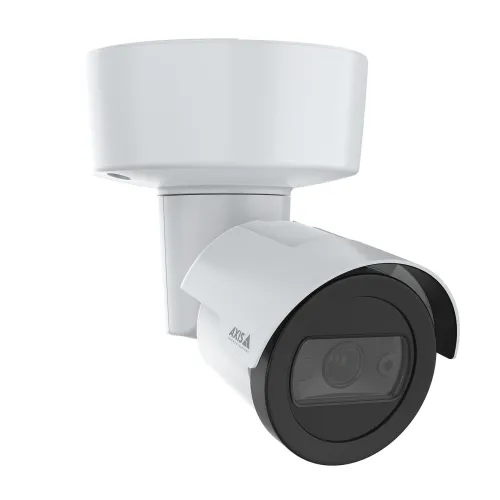
"The increased processing power available to edge devices and at the core of networks means multiple video analytics can be run concurrently to provide use for both security and non-security workflows. Security vendors are creating new value by integrating together video-centric security systems, IoT devices, AI-powered intelligent software, and services. This expanded approach enables these solutions to serve workflows beyond an organization’s security operations."
Josh Woodhouse, Lead Analyst and Founder, Novaira Insights
Cameras as business intelligence tools
Today’s IP cameras are generating actionable business insights by analyzing behavior and activities.
- Foot traffic analysis and dwell time: cameras track visitor counts, entry/exit flows, and the duration individuals spend in specific zones. Retailers use this data to optimize layout, staffing, and marketing, while transit hubs manage passenger flows and improve scheduling.
- Heatmaps and space utilization: visual heatmaps illustrate the most frequented areas, helping facility managers maximize space usage and enhance customer experience. Airports and large venues use this data to improve crowd management and operations.
- Customer and visitor analysis: AI-enabled cameras interpret movement and engagement patterns, enabling personalized promotions and operational improvements. Malls can identify peak food court times to adjust staffing, while transit hubs can improve wayfinding and manage passenger flows.

Intelligent cameras as operational assets
IP cameras extend significant value supporting asset monitoring, logistics, and compliance.
- Equipment and process monitoring: Cameras monitor machinery and production processes to detect anomalies, malfunctions, and safety hazards early, preventing downtime.
- Logistics visibility: In warehouses and distribution centers, cameras track goods, employees, and vehicles to optimize inventory management and supply chain efficiency.
- Predictive maintenance: Integrating visual data with other sensors allows predictive analytics to forecast maintenance needs, shifting operations toward proactive care.
- Compliance support: Cameras ensure compliance by monitoring safety protocol adherence and environmental controls in sensitive areas, providing audit trails and reducing liability.
- License plate recognition (LPR): LPR solutions verify the identities of known vehicles, streamlining deliveries to warehouses, critical infrastructure sites, and secure locations.
- Quality assurance: In manufacturing, video analytics can identify product defects and other quality issues, streamline QA practices and reduce potential losses.
- Automation and control: IP cameras trigger automated responses such as lighting adjustments, access controls, or alert dispatch based on real-time analytics.
In practice, IP cameras are transforming operations across industries. This illustrates the broader value of these devices: enabling smarter, safer, and more efficient operations through real-time insight, automation, and proactive decision-making. of intelligent cameras: enabling smarter, safer, and more efficient operations through real time insight, automation, and proactive decision-making.
Emerging modalities and multimodal AI
Advances in sensor technology and AI are pushing intelligent IP cameras beyond purely visual capabilities into multimodal analytical domains, enhancing situational awareness, detection accuracy, and contextual understanding. Cameras are increasingly becoming data-rich platforms capable of interpreting complex environments both in real time and over time.
- Audio analytics: detecting sound events – such as raised voices, breaking glass, machinery noise, or gunshots – adds vital context that complements visual analysis for better threat detection, incident validation, or equipment monitoring.
- Thermal imaging: thermal sensors offer visibility in low-light or obstructed conditions and can detect temperature variations for perimeter surveillance, asset monitoring, and fire prevention.
- Environmental sensing: integrated or networked sensors measure air quality, humidity, or pollutants, supporting use cases in manufacturing compliance, cleanroom monitoring, and urban air quality assessment.
- Radar integration: radar delivers range, speed, and motion data, enhancing detection where video alone may underperform, such as in poor lighting or bad weather. Radar-video fusion reduces false positives and improves motion tracking.
- Text and license plate recognition (OCR/LPR): optical character recognition systems extract textual information – such as license plates, signage, or product labels – adding semantic context for access control, logistics tracking, and safety enforcement.
- Object classification and metadata tagging: AI-driven detection distinguishes between people, vehicles, or other objects and metadata tagging (e.g., size, direction, motion) enables advanced search, behavior analysis, and system-wide filtering.
- Temporal and Contextual Analysis: timeline-based reasoning tracks how events evolve. This helps differentiate routine activity from emerging anomalies or risks in complex, dynamic environments.
By combining these diverse modalities, multimodal AI systems synthesize a richer, layered dataset that enhances decision-making and automation. They enable more nuanced event interpretation, reduce false alarms, and improve responsiveness in a wide range of environments.

"By turning video into actionable insight, enterprises can reduce risk, accelerate response, and make smarter decisions that improve efficiency and customer experiences today, while building a scalable foundation for future growth."
Verena Rathjen, Vice-President, EMEA, Axis Communications
Form factor expansion and specialized use cases
As intelligent camera technology evolves, form factors are diversifying to meet the distinct operational, environmental, and regulatory demands of various industries. This expansion is enabling more precise, scalable, and context-aware deployments across sectors such as public safety, healthcare, manufacturing, transportation, and critical infrastructure.
- Bispectral: Cameras that capture both visible and thermal imagery simultaneously support complex use cases such as condition monitoring, industrial inspection, and concealed object detection.
- Integrated audio and intercom: Devices with built-in microphones and speakers enable real-time two-way communication, enhancing visitor verification, access control, and emergency response workflows.
- Thermal and specialized cameras: In sectors like healthcare, energy, and manufacturing, thermal imaging supports applications from elevated temperature detection to equipment monitoring and fire prevention in visually obstructed environments.
- 360° / Panoramic: Fisheye and multi-sensor cameras provide wide-area coverage from a single device, reducing blind spots and total camera count. These are increasingly deployed in transportation hubs, large retail spaces, and public venues.
- Ruggedized and discreet: Designed for harsh or specialized conditions, rugged cameras are weatherresistant, vibration-proof, or explosion-protected. Meanwhile, compact or sensor-unit designs allow discreet installation in environments where aesthetics or discretion is critical.
- Drone and mobile-mounted: In emerging applications, intelligent cameras are mounted on drones or mobile platforms to inspect large-scale or hard-to-reach infrastructure. These deployments are gaining traction in energy, utilities, and remote site monitoring.
This broadening of camera form factors reflects a shift from static surveillance to highly adaptive, mission-specific tools. By selecting the right form factor for the environment and task, organizations can improve visibility, reduce infrastructure complexity, and unlock greater operational and strategic value.

Focus area: Body worn cameras
Body worn cameras are seeing significant adoption beyond law enforcement, driven by rising demands for accountability, safety, and operational transparency. According to Omdia (2024), the market is experiencing steady growth due to both technological evolution and expanding use cases across commercial sectors.
Key trends include:
- Open platform growth: open-platform body worn solutions can be integrated into any VMS, increasing accessibility within a previously closed, subscription-based market.
- Sector diversification: in addition to policing and corrections, body worn cameras are now used in retail, healthcare, transportation, and regulatory inspections to enhance staff safety, deter aggressive behavior, and document incidents.
- Regulatory and legal drivers: governments and oversight bodies increasingly mandate video documentation to support compliance and improve public trust.
- Operational efficiency and evidence management: cloud-connected body worn systems support centralized evidence storage and retrieval, streamlining workflows and incident resolution.
- Return on investment: despite upfront costs, reduced legal exposure, improved incident response, and better workforce protection generate long-term ROI.
- Market Outlook: Omdia forecasts 100% penetration of body worn cameras among frontline officers in multiple countries by 2028. Adoption in commercial markets continues to grow, favoring compact, cost-effective models with streamlined features.
This evolution underscores the broader trend toward intelligent, wearable surveillance as part of integrated safety and accountability ecosystems.
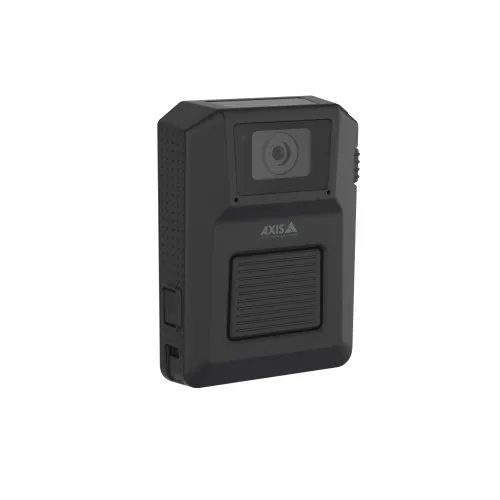
"The body worn camera market demonstrates steady technological and operational evolution. Consistent advancements have driven dual expansion: attracting new end user markets while deepening applications within established sectors."
Paul Bremner, Principal Analyst, Physical Security, Omdia
Enabling technologies and considerations
The transformation toward intelligent edge video solutions is being propelled by a powerful convergence of enabling technologies – AI, advanced imaging, cloud integration, and edge computing. Recent Axis data also reveals strong alignment among end users and system integrators around upgrading existing infrastructure, improving cybersecurity, integrating siloed systems, and leveraging emerging technologies. For system integrators, expanding beyond traditional security use cases to deliver operational and business insights is a growing differentiator. Together, these market drivers and technical capabilities are redefining surveillance.

Imaging advancements
Continued advancements in imaging technology have substantially enhanced how edge cameras perform, especially under challenging conditions. Notable developments include:
- Resolution and detail preservation: Higher-resolution image sensors now deliver sharper, more detailed imagery, enabling better object identification and broader coverage. This is increasingly important as AI analytics depend on clean, high-quality visual data for accurate interpretation.
- Light sensitivity and dynamic range: Enhanced low-light capabilities and wide dynamic range (WDR) imaging are improving visibility in scenes with backlight, glare, or deep shadows – common in applications like parking lots, entrances, and industrial yards
- Color accuracy: improvements in color fidelity support better distinction of objects and materials, aiding recognition tasks and operator interpretation.
- Lens and optical improvements: Advances in lens technology – such as wider apertures, motorized varifocal lenses, and multi-element optics – contribute to sharper, clearer images as well as flexible camera deployment.
- Image stabilization: Integrated stabilization reduces blurring caused by vibration or movement, important for cameras in dynamic or outdoor environments.
- Advanced encoding and smart compression: Edge devices use advanced encoding (e.g., H.264, AV1) and smart compression technology (e.g., Zipstream) to reduce bandwidth and storage requirements while preserving image quality. Intelligent algorithms dynamically adjust settings based on scene content and network conditions to maintain clarity.
These imaging advancements directly support end users’ top priorities – particularly the 64% focused on upgrading existing infrastructure – by delivering enhanced resolution, color accuracy, and dynamic range that improve the reliability and performance of modern security systems. By enabling intelligent edge cameras to capture high-quality video suitable for both human monitoring and AI-driven analysis, even in challenging conditions, these innovations form the visual backbone of today’s intelligent surveillance and monitoring solutions.

Data storage and efficiency
As organizations modernize their infrastructure, scalable and efficient video storage is becoming increasingly important – not only to manage growing data volumes, but also to ensure interoperability with cloud platforms and AI-driven analytics. This trend reflects the priorities of the 37% of end users investing Resolution and detail preservation: in technologies that enable more intelligent, data-rich systems.
- Efficient encoding: Efficient encoding: the AV1 codec delivers a major advancement in compression efficiency, reducing bandwidth requirements by 30–50% compared to older standards like H.264. This enables equivalent video quality at lower bitrates – minimizing storage needs and enhancing streaming performance, particularly in edge-to-cloud workflows.
- Adaptive streaming: techniques that dynamically adjust video resolution and bitrate based on network conditions ensure smooth playback and efficient bandwidth use, vital for remote viewing and cloud storage.
- Privacy-Safe Retention: as regulations tighten, intelligent systems are incorporating selective recording, metadata extraction, and anonymization, reducing risk while retaining insights.
To keep pace with rising video storage demands, many customers are shifting toward more flexible, scalable storage architectures – such as hybrid and edge cloud solutions. Efficient video storage and transmission will be a cornerstone of sustainable, scalable edge deployments – particularly as AI workloads and retention policies evolve.

"For customers, intelligence at the edge means faster, smarter decisions, simplified operations, and stronger security – all delivered through flexible, future-proof platforms."
Ettiene Van Der Watt, Vice-President, APAC, Axis Communication
AI and edge analytics
AI-powered analytics are revolutionizing how intelligence is generated and acted upon at the edge. By enabling real-time, data-driven insights with minimal latency, reduced bandwidth, enhanced privacy, and scalable deployment across diverse environments, these technologies are reshaping operational workflows and driving significant growth. Key advantages include:
- Real-time intelligence: edge AI enables cameras to analyze video streams locally, enabling low-latency detection, classification, and object tracking without sending raw data to the cloud. Gartner projects that by the end of 2025, over 55% of all deep neural network (DNN)–based data analysis will occur at the point of capture – reinforcing the case for real-time, on-device analytics. Axis survey data shows 37% of respondents are actively investing in AI and IoT to drive automation, actionable intelligence, and operational efficiency.
- Data-driven decision-making: advanced AI models support analytics ranging from facial recognition to behavioral anomaly detection, underpinning automated decisions and operational workflows.
- Bandwidth and privacy benefits: processing data locally reduces network congestion and lowers bandwidth costs by sending only essential metadata, alerts, or annotated video to the cloud. Keeping sensitive information on-site also strengthens privacy, supports compliance, and mitigates data breach risks.
- Scalable and distributed processing: running AI models on heterogeneous edge hardware allows flexible deployment across diverse environments. Gartner notes in Predicts 202515: Edge Computing Platforms Will Accelerate Edge AI, “infrastructure and operations leaders must be proactive in identifying use cases and enable this journey through a platform approach.” This reflects a broader trend where edge-AI deployments are reaching a maturity inflection point, making it critical to align hardware, software, and services.
Open architecture and ecosystems
Flexibility and future‑proofing are critical in IP camera deployments. Open architectures and ecosystem‑based approaches provide that adaptability by enabling seamless integration and evolution. Axis survey findings reveal that unifying disparate security systems into a single cohesive platform ranks among the top three priorities for end customers, as organizations seek to simplify management and improve operational efficiency, with 41% of respondents* emphasizing its importance.
- APIs & SDKs: robust application programming interfaces and software development kits enable cameras and devices to plug into third‑party applications, analytics platforms, cloud APIs, and automation workflows.
- Vendor‑neutral and standards‑based platforms: supporting open protocols and industry standards reduces vendor lock‑in and ensures interoperable hardware and software.
- Innovation enablement via ecosystems: open ecosystems expand partner networks, foster collaboration and accelerate development of analytic apps, helping meet diverse customer needs.
- Modularity and scalable architecture: modular, scalable system designs simplify integration of emerging technologies while preserving existing investments, ensuring long-term adaptability and future-proofs deployments.
- Edge/On Premises/Cloud hybrid models: modern deployments increasingly blend edge, on-premises, and cloud resources to optimize latency, bandwidth, and scalability. Open platforms support distributed architectures, enabling edge-to-cloud streaming, cloud-based AI, and centralized management.
The steady rise in cloud-connected camera deployments – with over 1.5 million Axis cameras now connected via a oneclick cloud connection (O3C) service, AXIS Camera Station, Axis Cloud Connect, and partner platforms – further reinforces the market’s readiness for hybrid and cloud-integrated architectures at scale.
An open, ecosystem-driven approach reflects industry momentum toward flexible, extensible architectures that foster collaborative innovation in IP camera deployments.

Cybersecurity and lifecycle management
Security considerations underpin the IP camera ecosystem. As threats targeting connected devices continue to escalate, safeguarding edge deployments has become a strategic imperative. Axis survey data shows that cybersecurity now ranks as the #2 concern among end users, A&Es, and system integrators, highlighting growing awareness of risks tied to connected infrastructure.
- Device hardening and built-in cybersecurity: modern edge cameras incorporate hardware-based security features like physically unclonable functions (PUF), ChipDNA, and secure boot to prevent unauthorized access or tampering. These safeguards are essential in a threat landscape where 99% of IoT exploitation attempts now rely on known CVEs16 (Common Vulnerabilities and Exposures).
- Data protection: encryption of data at rest and in transit, combined with strong access controls and multi-factor authentication, prevents interception or misuse of video and stored footage. With 78% of security and risk management (SR) professionals reporting potential breaches in the past year, these measures are foundational for protecting critical infrastructure.
- Secure supply chain: ensuring device integrity throughout production and deployment is crucial to prevent tampering and counterfeit parts and guarantee devices function as intended. Trusted components, supply chain verification, and secure provisioning help mitigate risks, as insecure onboarding leaves networks vulnerable to unauthorized IoT devices.
- Zero trust integration: cameras and edge systems are increasingly part of zero trust architectures, enforcing continuous verification, strict identity management, and minimal trust assumptions to limit lateral movement within networks and align with the modern cybersecurity principle of “assume breach.”
- Lifecycle management: device management platforms enable secure installation, firmware updates, remote configuration, and system health monitoring throughout the entire product lifecycle. Predictive health analytics enable proactive maintenance, minimizing downtime and extending device longevity. Axis surveys show that upgrading existing infrastructure is a top priority for many organizations over the next 1–3 years, while NIST (National Institute of Standards and Technology) emphasizes that firmware updates and lifecycle visibility are essential for maintaining long-term security.
- Total device strategy: Organizations are embracing end-to-end security strategies that span installation, network segmentation, secure onboarding, and long-term device support to ensure resilience. With global cybersecurity spending projected to grow at a 14.4% CAGR to $302.5B by 2029, enterprises increasingly prioritize device lifecycle management and cyber hygiene for edge deployments.
Together, these cybersecurity and lifecycle management practices help customers keep their intelligent edge systems protected from evolving threats while ensuring consistent uptime, smoother operations, and easier compliance across even the largest deployments.
Looking ahead: The next phase of intelligent video
Intelligent video is entering a new era – one defined not just by smarter cameras, but by a shift in how organizations think about security, data, and enterprise performance. As imaging, AI analytics, hybrid architectures, and secure lifecycle management converge, IP cameras have evolved into powerful edge platforms that deliver real-time insights across the business.

Organizations are already moving in this direction, prioritizing modernization, unification, cybersecurity, and the adoption of AI, IoT, and cloud technologies. What began as a security function is now expanding into broader operational and strategic value, enabling teams to improve safety, streamline processes, optimize resources, and make more informed decisions.
This creates new expectations for integrators, technology providers, and end users – demanding deeper expertise, stronger security practices, and seamless integration across ecosystems. Success from here will hinge on how well organizations bring these technologies together and overcome challenges like legacy integration, data complexity, and workforce adoption.
Those that get it right will turn intelligent video into a long-term competitive advantage. The intelligent camera has become a true strategic asset. And as organizations embrace more connected, AI-enabled, and secure video systems, the question is no longer if video will shape the future of operations and decision-making – but how far its impact will reach.
Axis Perspectives 2026: The intelligent edge
A glimpse into what’s next for intelligent video, the Axis Perspectives 2026 report delivers research-driven insight, expert analysis, and strategic foresight on how smart, connected technologies are reshaping security and beyond.
* For sources of industry and Axis research data cited on this page, please go to the report.
Further reading

AV1: the smarter surveillance codec
Learn how AV1 cuts bandwidth and boosts video clarity in next-gen security applications
Beyond AI hype in security
Discover how AI is evolving security beyond hype—with deep learning, edge insights, and ethical design.
Business intelligence in retail
Smart AI vision transforms retail operations — faster, smarter, more efficient.
The cities of tomorrow
AI, IoT, and smart analytics power future ready, tech driven city transformation.